
Overview
A major downstream energy company sought to modernize its refinery business processes and technology landscape across an extensive network of refining operations.
With fragmented system architectures, limited cross-system integration, and inconsistent business processes across regions, the organization needed a structured approach to identify improvement opportunities and define a more integrated operating environment.
Proclink conducted an assessment of existing refinery processes, evaluated gaps against industry practices, and developed future-state business processes, data flows, and functional requirements to guide the client's digital transformation initiatives.
The Client
The client is a downstream energy company specializing in petroleum refining, marketing, and transportation, with operations spanning more than 10 refineries connected through multiple transportation networks.
Managing this extensive operational landscape required greater consistency in business processes, stronger data governance, and better integration across refinery planning, scheduling, and operational functions.
The Challenge
The client's refinery business environment had evolved across multiple operations and regions, creating challenges in standardization, integration, and enterprise-wide visibility.
Key challenges included:
- Fragmented system architecture: Certain refinery workstreams lacked clearly established system architectures, limiting consistency across operations.
- Limited system integration: Disconnected applications and workflows made cross-functional coordination more complex.
- Inconsistent business processes: Variations in regional and local practices made it difficult to establish a standardized enterprise-wide operating model.
- Limited master data governance: Gaps in governance practices created a need for more consistent master data management.
- Non-standardized reporting: Differences in reports and dashboards across regions limited the organization's ability to establish a consolidated view of operations.
The organization needed to address these challenges while defining a practical foundation for long-term digital transformation.
Project Objectives
The engagement focused on assessing current refinery business processes and defining an integrated future-state operating model informed by industry best practices.
The key objectives were to identify process and technology gaps, evaluate opportunities for standardization, and establish business and functional requirements for future digital initiatives across nine refinery workstreams.
Proclink's Approach
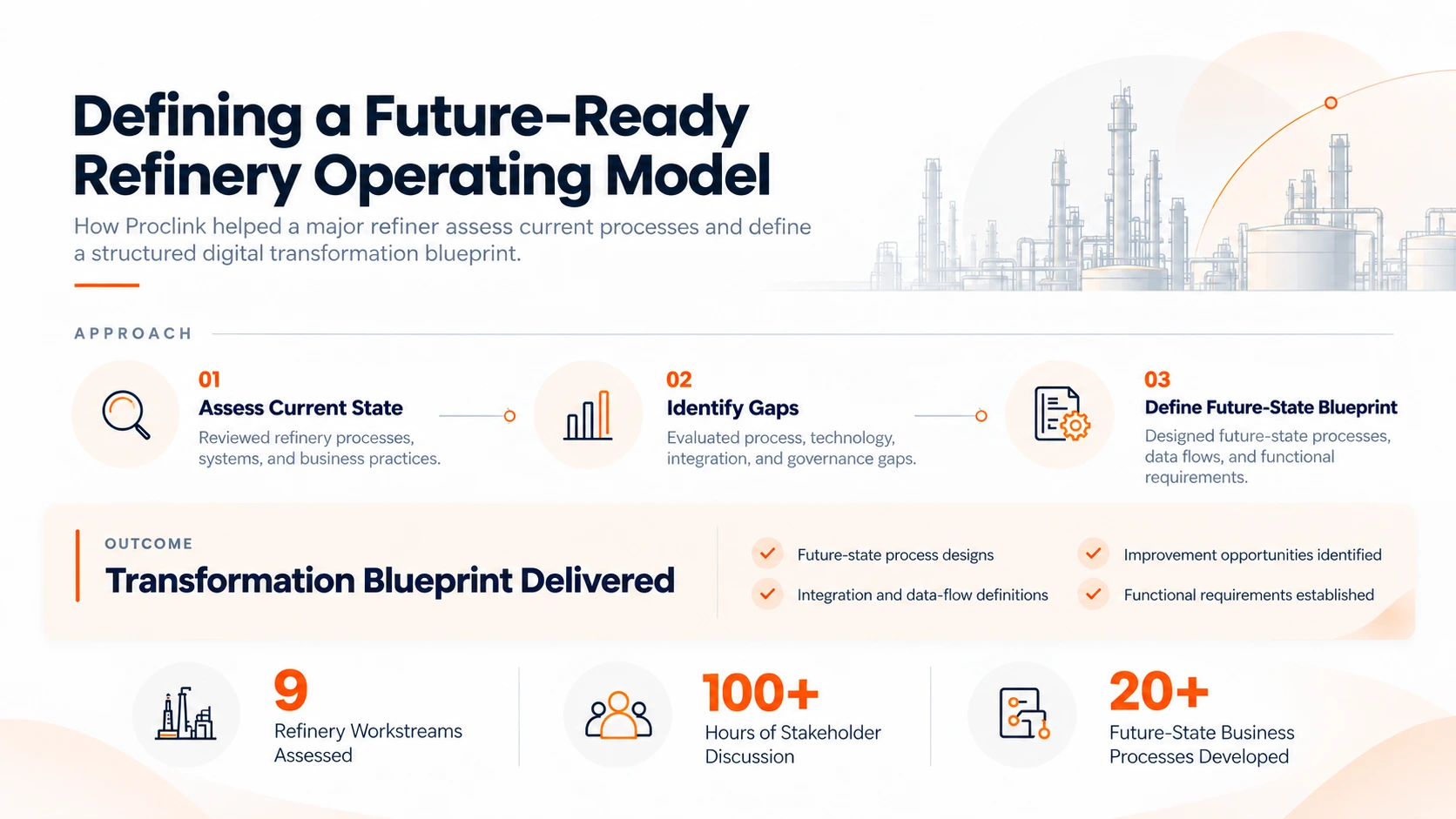
Proclink combined refinery domain expertise, process assessment, stakeholder collaboration, and future-state design to develop a structured transformation blueprint.
1. Assess Current Processes and Aspirations
Conducted an As-Is and aspirations assessment to understand existing refinery workflows, technology limitations, and future business requirements.
2. Identify Gaps and Improvement Opportunities
Evaluated current processes against leading refinery practices to identify operational pain points, integration gaps, and opportunities for process improvement.
3. Define the Future-State Operating Model
Developed a vision for a vertically integrated refinery business landscape, highlighting opportunities to align processes and information flows across workstreams.
4. Design Business Processes and Data Flows
Created To-Be business processes and supporting data flows to illustrate how refinery functions and information could be better integrated.
5. Establish Functional Requirements
Developed detailed functional requirements to support the evaluation, design, and implementation planning of future digital systems.
Scope of the Transformation Assessment
The engagement covered nine interconnected refinery business workstreams, spanning planning, scheduling, operational management, and enterprise data governance.
| Operational Area | Workstreams |
| Refinery Operations | Refinery Operations, Terminal Operations |
| Planning & Scheduling | Refinery Scheduling, Long-term Planning, Mid-term Planning, Near-Term Planning |
| Crude & Feedstock Management | Crude & Feedstock Evaluation |
| Planning Support | Back Casting |
| Data Governance | Master Data Management |
Key Project Deliverables
The engagement established a structured foundation for the client's refinery digital transformation initiatives.
- As-Is assessment: Documented existing business processes, operational challenges, and technology gaps.
- Future-state vision: Defined an integrated refinery business landscape informed by industry practices.
- Process improvement initiatives: Identified and presented targeted opportunities through stakeholder discussions and design thinking activities.
- To-Be process and data-flow designs: Developed process models illustrating the proposed future operating environment.
- Functional requirements: Documented system capabilities required to support future digital transformation initiatives.
Project Outcomes
The engagement provided the client with a clearer understanding of its existing operational landscape and a structured basis for planning future process and technology improvements.
By connecting the findings of the current-state assessment with future-state designs and functional requirements, Proclink helped establish a foundation for:
- More consistent refinery business processes across operations and regions.
- Better alignment between refinery planning, scheduling, operations, and data management.
- Improved clarity on integration and master data governance requirements.
- Prioritized process improvement opportunities.
- More informed planning and evaluation of subsequent digital transformation initiatives.
The project translated broad digital transformation aspirations into documented process designs, functional requirements, and improvement opportunities that could guide the client's next phase of modernization.